When AI is smarter than humans, how should organizations prepare for the future workforce?
Summary
As AI becomes smarter than humans, organizations must rethink how they prepare their workforce for the future. This shift is not about competing with AI, but learning how to collaborate with it. Companies need to cultivate adaptable talent, strengthen human skills such as creativity and critical thinking, and build a continuous learning culture.
By embracing AI tools, redesigning work processes, and encouraging interdisciplinary collaboration, organizations can create a resilient, future-ready workforce. The goal is not to replace people, but to elevate human potential, transforming AI from a threat into a powerful partner for innovation and long-term success.
The Need to Prepare for the Future Workforce in the Era of AI
With the rise of AI, we are entering a new wave of evolution, one that reshapes how work is done across every industry. This makes it necessary for every organization to prepare its workforce for the future. Markets have always changed, but AI has accelerated this pace faster than any period in history. Research shows that AI will transform or augment more than half of all current job tasks within the next decade not to replace people, but to shift human roles toward higher value and more meaningful work (McKinsey, 2023; World Economic Forum, 2024).
AI can take over the repetitive or manual parts of work so that humans can focus on creativity, problem-solving, leadership, and meaningful decision-making. But to benefit from this shift, we must help our people adapt, learn new mindsets, and develop confidence using these new tools. If we do not, the risk is not that AI replaces us, but that other organizations who embrace AI faster will move ahead (Accenture, 2023). When we equip our workforce with the right skills and mindset, AI becomes not a threat, but a powerful partner that helps us achieve outcomes we could not reach before.
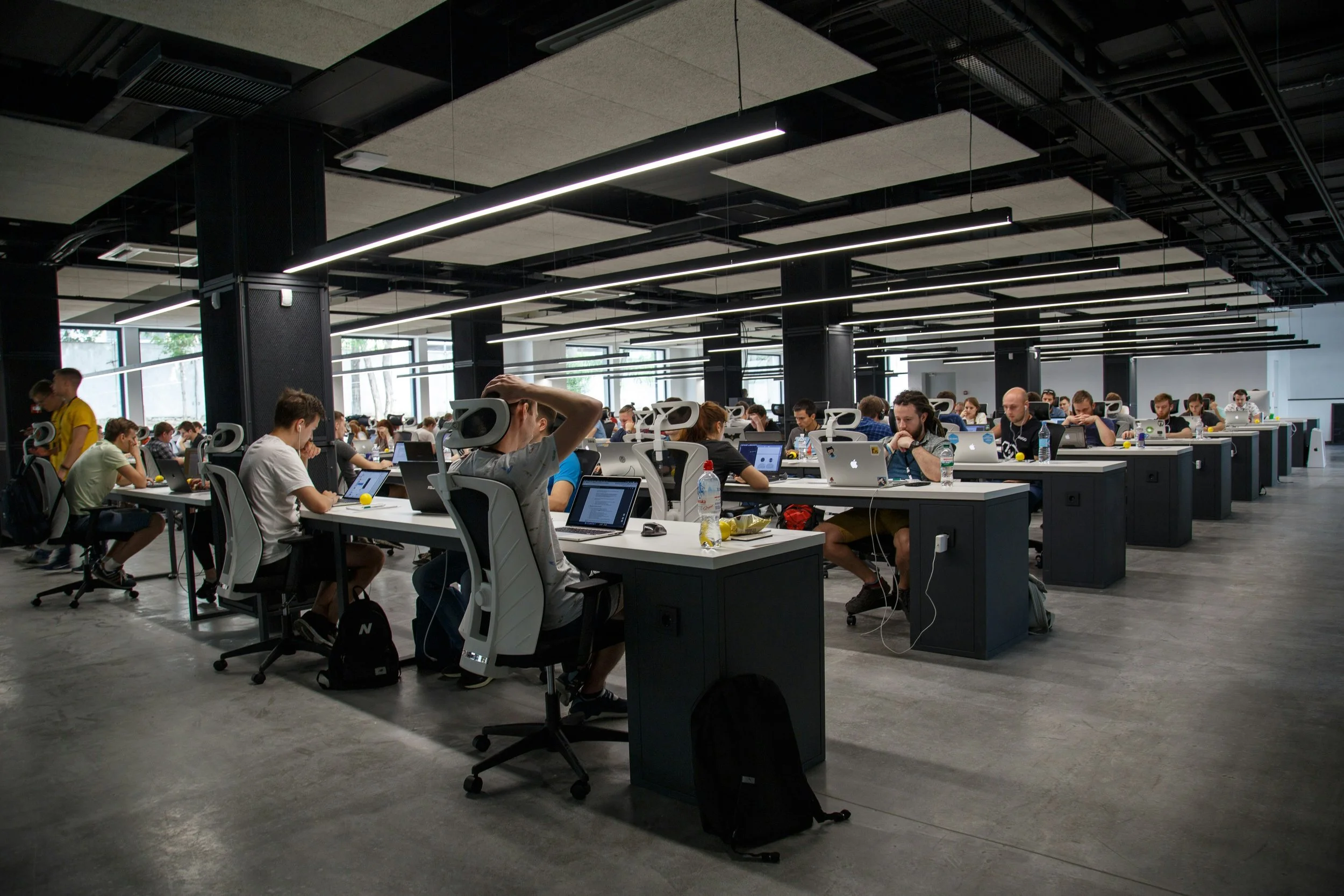
Photo by Alex Kotliarskyi on Unsplash
The Purpose of Machines
Machines are designed to help humans perform tasks better, faster, and with greater accuracy. Because of this purpose, it is logical and expected that machines will eventually become smarter than us in many specific areas, especially those involving speed, calculation, memory, and pattern recognition. Throughout history, humans have always built tools that outperform our physical and mental limits.
A simple example is the car. Humans created cars to travel faster and more efficiently than walking or riding a horse. When society first transitioned from horses to cars, many people resisted and felt uncertain about the change but over time, society adapted. Research shows that major technological shifts often bring short-term disruption before eventually improving productivity and raising living standards (Gordon, 2016; Mokyr, 1990). The same pattern can be seen with inventions like the calculator, which made counting and numerical tasks far more efficient than manual calculation.
AI Will Eventually Become Smarter Than Humans
AI follows this same logic. Humans design AI systems to think faster, process more information, and perform certain tasks better than humans can (McKinsey, 2023). So we should not be surprised that AI becomes “smarter” than us in the tasks it was built for. The purpose of a tool is to exceed human ability in its specific function.
Should we be afraid of this? I believe the answer is no. Just as we are not afraid of cars running faster than us or calculators doing math quicker than us, we should focus on understanding how AI works and how it can help us achieve what we want to do best. Modern research shows that AI enhances human skills rather than replaces them completely and organizations that learn to use AI effectively gain significant advantages (Accenture, 2023).
The Fear of Replacement
However, the concern about jobs is real. Whenever powerful tools emerge, some roles naturally disappear. This has happened in every major technological shift in history from horses to cars, typewriters to computers, radios to digital streaming. These transitions caused many occupations to evolve or disappear, but they also created new roles and industries (World Economic Forum, 2024).
The fear of replacement is understandable, but history teaches us that the real risk is not technology itself, it is failing to adapt to it. Instead of worrying about being replaced by machines, we should shift our mindset and focus on how to use AI as a tool to amplify our capability, increase our performance, and generate outcomes that we could not achieve on our own. Tools replace tasks, not human purpose.
In the same way that cars, tractors, electricity, and computers changed the nature of work, AI will reshape future jobs. The goal is not to compete with machines but to learn how to work alongside them. This is how humans have always progressed and the era of AI will be no different.
How Humans Evolve When Jobs Are Replaced by Technology in History
Throughout history, technology has changed the way people work. Each time a new tool or machine replaced old tasks, humans did not disappear, they evolved. The pattern is consistent: a tool becomes smarter, old jobs fade, new opportunities emerge, and people shift toward higher-value roles (Mokyr, 1990; Gordon, 2016). Below are some examples of how humans have adapted across different eras.
1. From Manual Labour to Machine Power
Example jobs replaced: people who manually made clothes, farm workers, water carriers
When machines entered the workplace, many physically demanding jobs were replaced by tools that could work faster and with less effort. For example, making clothes by hand used to take many hours, but sewing machines made the process much quicker and required fewer workers (Smithsonian, 2020). On farms, people used to plough land and harvest crops by hand, but machines like tractors and harvesters took over these heavy tasks (USDA, 2005). In the past, people carried water to homes, but pipes and water systems replaced this job completely (UN Water, 2010).
Instead of doing the hard labour themselves, people learned to operate, maintain, and supervise these machines. This shift allowed humans to move into safer, more technical, and more efficient roles. It shows a simple pattern: when machines take over physical work, humans move into roles that require operating, planning, and improving those machines.
2. From Simple Manual Tasks to Automation
Example jobs replaced: lamp lighters, elevator operators, telephone switchboard operators
As automation expanded, many simple tasks that required human presence became unnecessary. Street lamps were no longer lit by hand once electricity was introduced (Misa, 2004). Elevators no longer needed operators when automatic control panels arrived. Telephone calls no longer required manual operators once switching systems became digital (Gertner, 2012). People adapted by moving into service jobs, customer-facing roles, technical maintenance, and administrative work.
Automation removed basic tasks but created opportunities in jobs that depend on human judgment, communication, and service.
3. From Paperwork to Computer Work
Example jobs replaced: typists, filing clerks, bookkeepers
The computer revolution replaced many repetitive office jobs. Typing pools became unnecessary when personal computers were introduced widely in offices (Friedman, 2005). Filing clerks became fewer as data moved into digital systems. Basic bookkeeping was automated by accounting software. People evolved by learning computer literacy and stepping into new roles like data analysis, office management, IT support, and decision-making roles.
Computers removed repetitive paperwork, allowing humans to focus more on organizing information, interpreting data, and solving problems.
4. From Physical Stores to Digital Platforms
Example jobs replaced: travel agents, CD/DVD store workers, cashiers
The internet transformed how people buy and communicate. Online booking platforms replaced many travel agency roles (WEF, 2024). Streaming services made DVD and CD shops unnecessary (Cusumano, 2010). Self-checkout systems reduced cashier roles. But people adapted by moving into digital-related jobs such as e-commerce operations, digital marketing, online customer service, content creation, and app development.
This era shows that when consumer behaviour shifts online, humans evolve to provide digital experiences, design technology, and manage online customers.
5. From Repetitive Thinking to AI-Assisted Work
Example jobs replaced: data-entry clerks, junior designers, basic analysts
AI is now starting to automate routine thinking tasks, such as generating basic designs, extracting data, or summarizing documents. Research shows AI can automate up to 50% of predictable work tasks (McKinsey, 2023). Instead of replacing people completely, AI opens the path for humans to perform higher-level responsibilities.
People now evolve by learning to use AI tools, reviewing AI outputs, making decisions with judgment, applying creativity, solving complex problems, and leading human-focused processes. The new roles include AI-assisted marketing, AI-supported healthcare, AI-driven analysis, and many hybrid roles that blend human intelligence with machine capability.
How to Better Prepare for the Future Workforce ?
History makes one thing very clear: the people who move forward are the ones who adapt, learn, and make use of new tools. Those who resist change eventually fall behind (Brynjolfsson & McAfee, 2014). As we enter the age of AI, simply completing tasks is no longer enough. To stay relevant, we must shift our focus from doing work to creating value, especially value that only humans can offer.AI can take over routine or repetitive tasks, but it can hardly replace human qualities such as judgment, creativity, empathy, and the ability to understand deep meaning. This is why the future workforce must evolve from task execution to value creation.
To prepare for this shift, below are ten essential ways to strengthen our people and ensure they stay competitive in an AI-driven world.
1. Strengthen Human Thinking Skills
As AI becomes more advanced, human thinking becomes even more important. AI can give quick answers, but humans must interpret, question, and evaluate those answers responsibly. The future workforce needs sharper critical thinking, stronger reasoning, and the ability to examine problems from multiple perspectives.
These thinking skills are crucial for good decisions, ethical judgment, and creative solutions (WEF, 2024). Technology can support thinking, but it cannot replace human understanding of context, emotion, intention, or meaning. In a world overflowing with information, the people who can think clearly and independently will always stand out.
2. Build Digital Fluency, Not Just Technical Skill
Most workers do not need to code, but they must be confident using digital tools, automation systems, and AI platforms. Digital fluency means knowing what a tool can do, when to use it, and how to combine its output with human judgment.
This capability is now considered one of the top skills for the future workforce (Accenture, 2023). When people use technology effectively, they work faster, think more creatively, and deliver stronger results.
3. Become Highly Adaptable and Comfortable With Change
Technology now evolves at a rapid pace. Roles that were stable for years may shift within months. The people who will thrive are those who stay curious, flexible, and ready to grow into new responsibilities.
Adaptability is now one of the strongest predictors of long-term success (Deloitte, 2022). When workers embrace change, they see new tools as opportunities instead of threats, making them more resilient and future-ready.
4. Learn to Work With AI as a Partner
The future is not humans versus AI, it is humans working alongside AI. Those who succeed will know how to delegate tasks to AI, check and refine its outputs, and use it to expand their own thinking.
AI handles repetitive work best, while humans excel in judgment, leadership, empathy, and creativity. When these strengths are combined, productivity increases significantly (McKinsey, 2023).
5. Build Creative and Innovative Thinking
AI can analyse patterns, but it can’t imagine new possibilities in the real-world context. Creativity remains one of the most valuable human skills (WEF, 2024). Innovation happens when people connect ideas across different fields and explore new perspectives. Human creativity powered by curiosity, intuition, and a willingness to experiment drives breakthroughs that machines alone cannot achieve.
6. Practice Continuous Effective Learning
Continuous and effective learning keeps workers relevant, confident, and ready for change. Research shows that people who learn consistently adapt more quickly and achieve better performance (OECD, 2021). Learning is no longer something that ends after school or must happen in the school setting, it must become a lifelong habit. In the era of AI, how quickly we learn becomes more important than what we already know. The ability to learn effectively is now a core career skill, and organizations must prepare their workforce to develop this capability.
7. Stay Open-Minded and Avoid Cognitive Bias
Staying open-minded allows workers to accept new ideas, explore new tools, and adapt more easily. Cognitive biases which is human mental shortcuts can block innovation and limit growth.
Overcoming these biases leads to better thinking, better decisions, and better teamwork (Harvard Business Review, 2019). Open-minded people respond to change faster and collaborate more effectively.
8. Embrace a Growth Mindset
A growth mindset encourages people to see challenges as learning opportunities rather than threats. Research shows that people with a growth mindset are more resilient, more creative, and more motivated to improve (Dweck, 2006).
In a fast-changing workplace, this mindset helps workers adapt quickly and take on new roles with confidence.
9. Collaborate Across Disciplines and Function
Many of the most transformative and innovative solutions today emerge when people combine knowledge from different fields. Research shows that interdisciplinary collaboration leads to stronger ideas, more effective problem-solving, and breakthroughs that have greater real-world impact (MIT Sloan, 2020).
Encouraging collaboration across departments also helps employees develop broader thinking, improve communication skills, and understand how their work contributes to the bigger picture. This not only strengthens organizational performance but also prepares the workforce to thrive in complex, fast-changing environments.
10. Focus on Creating Value, Not Just Finishing Tasks
AI can complete tasks at a speed humans cannot match. But defining problems, understanding people, and creating meaningful outcomes are uniquely human abilities.
Focusing on value—not tasks—is the key to staying essential (WEF, 2024). When workers understand their organization’s purpose and apply first-principles thinking, they make smarter decisions and contribute to long-term success. Value creators will thrive in the era of AI, while those who only finish tasks will be the easiest to replace.
Conclusion
Technology itself is neutral. It does not decide whether the world becomes better or worse. The responsibility lies in human hands. We choose how to use technology, and we must guide it toward the benefit of people and society. The real question is not what technology will become, but how we utilize the technology to fit the needs of the future.
When we use with the right mindset, skills, and values, technology becomes a powerful partner that helps us achieve more, serve better, and create a future that supports human progress.
References
McKinsey Global Institute. (2023). The Economic Potential of Generative AI. https://www.mckinsey.com/capabilities/tech-and-ai/our-insights/the-economic-potential-of-generative-ai-the-next-productivity-frontier
McKinsey Global Institute. (2023). Generative AI and the Future of Work in America. https://www.mckinsey.com/mgi/our-research/generative-ai-and-the-future-of-work-in-america
World Economic Forum. (2024). Future of Jobs Report 2024. https://www.weforum.org/publications/series/future-of-jobs/
Accenture. (2023). Humans, AI & Robots: Reinventing Work & Workforce. https://www.accenture.com/content/dam/accenture/final/capabilities/strategy-and-consulting/strategy/document/Accenture-Humans-AI-Robots.pdf
Deloitte. (2022). Future of Work Insights. https://www.deloitte.com/global/en/issues/work.html
Brynjolfsson, E., & McAfee, A. (2014). The Second Machine Age. https://wwnorton.com/books/the-second-machine-age/
Mokyr, J. (1990). The Lever of Riches: Technological Creativity and Economic Progress. https://global.oup.com/academic/product/the-lever-of-riches-9780195074772
Gordon, R. J. (2016). The Rise and Fall of American Growth. https://press.princeton.edu/books/hardcover/9780691147727/the-rise-and-fall-of-american-growth
Smithsonian Institution. (2020). Sewing Machine Trade Literature Collection. https://library.si.edu/digital-library/book/sewingmachineit00coop
USDA Economic Research Service. (2005). Structure and Finances of U.S. Farms: Family Farm Report. https://www.ers.usda.gov/publications/pub-details?pubid=43824
UN Water. (2010). History of Water Supply Systems. https://unsceb.org/sites/default/files/2020-12/UN-Water-2010-Annual-Report.pdf
Misa, T. J. (2004). Leonardo to the Internet: Technology & Culture. https://books.google.com.my/books/about/Leonardo_to_the_Internet.html?id=2uc3H146uckC&redir_esc=y
Gertner, J. (2012). The Idea Factory: Bell Labs and the Great Age of American Innovation. https://books.google.com.my/books/about/The_Idea_Factory.html?id=uOMt_XCo81QC&redir_esc=y
Friedman, T. L. (2005). The World Is Flat. https://www.amazon.com/World-Flat-History-Twenty-first-Century/dp/0374292884
Cusumano, M. A. (2010). Staying Power. https://books.google.com.my/books/about/Staying_Power.html?id=aZHZxxkBKX8C&redir_esc=y
OECD. (2021). Skills Outlook 2021: Learning for Life. https://www.oecd.org/en/publications/2021/06/oecd-skills-outlook-2021_6f4da936.html
Harvard Business Review. (2019). How the Best Bosses Interrupt Bias on Their Teams. https://hbr.org/2019/11/how-the-best-bosses-interrupt-bias-on-their-teams
Dweck, C. S. (2006). Mindset: The New Psychology of Success. https://www.penguinrandomhouse.com/books/44330/mindset-by-carol-s-dweck-phd/
MIT News. (2020). Interdisciplinary Approach to Innovation. https://news.mit.edu/2020/interdisciplinary-approach-sustainable-ppe-1029
